

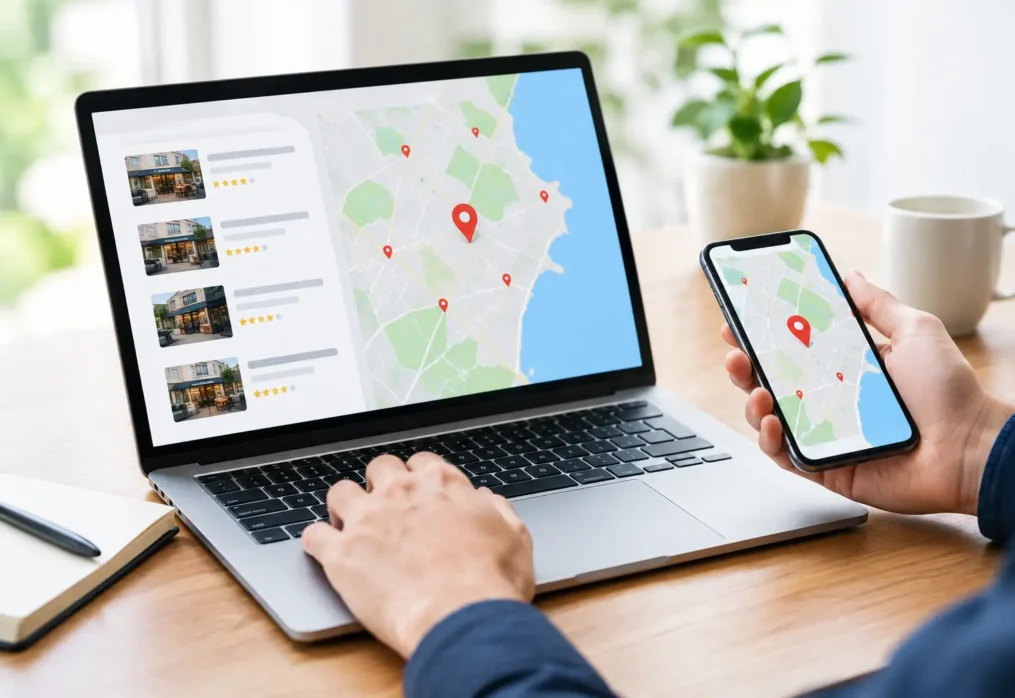

A customer searches for a service while standing a few miles from your business. If your company does not appear in the map results, local listings, or the first page of results, that customer may never know you were an option. To improve local search visibility, you need more than a business name online. You need a credible, consistent digital presence that makes it easy for search engines and customers to choose you.
Local search is where visibility becomes revenue. For a restaurant, clinic, contractor, retailer, consultant, or B2B service provider, a strong local presence can generate calls, directions, quote requests, store visits, and qualified leads. The goal is not simply to rank for a broad keyword. It is to show up at the moment a nearby customer is ready to act.
Why Local Search Visibility Drives Business Growth
Search engines want to recommend businesses that appear relevant, established, nearby, and trustworthy. That means your local visibility is influenced by several connected signals: the quality of your business profile, the consistency of your contact details, customer reviews, website relevance, local content, and the overall strength of your brand.
A polished Instagram account alone will not solve a weak local search presence. Neither will a beautiful website that does not clearly explain where you operate or what you offer. Customers move between Google searches, maps, social media, reviews, and your website before making a decision. Each channel should reinforce the same message: this is a professional business that can solve my problem.
The payoff can be significant. Better local visibility brings in people with clear intent, which often means a shorter path from discovery to conversion. It also gives smaller businesses a practical way to compete with larger brands that may have bigger advertising budgets but less local relevance.
Improve Local Search Visibility With a Complete Business Profile
Your business profile is often the first impression a customer receives. Treat it as a sales asset, not a directory listing you set up once and forget. Claim and verify your primary business profile, then complete every relevant field with accurate, customer-friendly information.
Use your real business name, correct primary category, phone number, website, hours, service areas, and physical address where applicable. Choose categories carefully. A general category may feel safe, but a more precise category can help connect your business to searches that match your services. A web design agency, for example, should not rely on a vague professional-services label if more relevant options are available.
Add high-quality, current photos that show your location, team, finished work, products, or customer experience. Images should support trust, not create confusion. If your office has changed, your team has grown, or your branding has evolved, update the profile. Outdated details create friction for customers and send poor quality signals.
For businesses without a customer-facing storefront, service-area settings matter. Be accurate about where you actually work. Listing every surrounding city in hopes of reaching farther can weaken trust when your content, reviews, and operations do not support those claims.
Keep Your Business Information Consistent Everywhere
Search engines compare information across the web. If one listing shows an old phone number, another uses a shortened business name, and your website displays a different address format, your authority can become diluted. Customers can also lose confidence quickly when they cannot tell which information is correct.
Audit the places where your business is mentioned, including major directories, social platforms, industry listings, partner sites, and local association profiles. Your name, address, phone number, website, and hours should match your official business details. Small formatting differences are usually less harmful than major contradictions, but consistency is still worth protecting.
Do not create duplicate listings to target extra neighborhoods or keywords. That tactic can confuse customers and create a cleanup problem later. One accurate foundation is more valuable than several questionable profiles.
Build a Website That Proves Local Relevance
Your website gives local search engines and potential customers the context that a listing cannot provide. It should state what you do, who you serve, and where you serve them in clear language. Avoid hiding your location and service information behind vague marketing copy.
Create dedicated service pages that answer real buyer questions. Explain the outcome, the process, the types of customers you help, and the areas you serve when that detail is genuinely relevant. A Toronto accounting firm, for instance, may benefit from pages that discuss its core accounting services and the local businesses it supports. A company serving multiple regions should build pages only for markets where it has real experience, availability, and proof.
Your contact page should make action simple. Include accurate business details, a clear inquiry option, and a layout that works well on mobile. Many local searches happen on phones, often when customers need an immediate answer. A slow, cluttered, or outdated site can waste the visibility you worked hard to earn.
Technical performance matters, but it should serve the customer experience. Fast load times, secure pages, readable text, simple navigation, and accessible forms help visitors stay engaged. Design and development are not separate from local marketing. They are part of the conversion system.
Earn Reviews That Strengthen Trust
Reviews influence both customer confidence and local prominence. A business with recent, thoughtful feedback looks active and accountable. It also gives future customers a sense of what working with you is actually like.
The best approach is straightforward: ask satisfied customers for an honest review soon after a successful interaction. Make the request personal, timely, and easy to complete. Do not pressure customers for five stars, offer incentives for reviews, or filter requests so only positive feedback is collected. Those shortcuts can damage credibility and may violate platform policies.
Respond to reviews with professionalism, including negative ones. Thank positive reviewers without relying on the same generic reply every time. For criticism, acknowledge the concern, avoid a public argument, and invite a reasonable next step where appropriate. A thoughtful response does not erase a poor experience, but it shows prospective customers that your business takes accountability seriously.
Create Local Content With a Real Purpose
Local content works when it helps customers, not when it repeats city names endlessly. Search engines have become far better at recognizing thin pages created solely to capture location-based traffic. Your content needs a useful reason to exist.
Write about local projects, regional customer needs, seasonal service considerations, community partnerships, case studies, or frequently asked questions from clients in your market. A retailer could highlight local events or buying guides. A home service company could explain weather-related maintenance concerns. A B2B firm might publish a case study showing how it helped a nearby organization solve a specific operational challenge.
This content creates proof of local knowledge while giving your social media and email marketing something valuable to promote. It also supports a stronger brand voice. Customers should see the same professionalism and clarity whether they find you through a map listing, a social post, or a service page.
Use Social Media to Support Discovery, Not Replace It
Social platforms can expand awareness, build familiarity, and encourage engagement, especially for visual businesses and brands with active communities. Location tags, local collaborations, event coverage, and customer-generated content can all help put your business in front of the right audience.
However, social media is rented space. Platform reach can change without warning, and a follower count does not guarantee business growth. Use social content to direct people toward your owned digital assets: your website, product pages, lead forms, and business profile. The strongest strategy connects audience growth with a clear next action.
For some businesses, Instagram may be a major discovery channel. For others, LinkedIn, video, email, or local partnerships may produce more qualified leads. The right mix depends on your audience, buying cycle, service category, and capacity to create consistent content.
Measure What Brings Customers Closer
Do not judge local search progress by rankings alone. Rankings fluctuate based on the searcher’s location, device, search history, and competition. A better question is whether more qualified people are finding and contacting your business.
Track calls, direction requests, website visits, form submissions, booked appointments, online orders, and leads that mention search or maps. Review which services and locations generate the most interest. If a page gets traffic but no inquiries, the issue may be unclear messaging or a weak call to action rather than visibility.
Local search takes sustained attention. A new profile may improve quickly, while competitive markets and high-value services can require months of consistent optimization, reviews, content, and website improvements. The businesses that win are usually not chasing a single trick. They are building a digital presence customers can trust at every step.
Your next local customer is already searching for an answer. Give them a clear reason to find your business, believe in your brand, and take action. RDM Media can help turn that visibility into a stronger digital foundation built for real growth.